
THE UNBROKEN SHIELD OF SIDNEY GOTTLIEB
THE DISPATCH
Donn Belmont
6/22/20265 min read

When historical narratives get sanitized for public consumption, they always try to frame Project MKUltra as some bizarre, failed sci-fi sideshow of the early Cold War—a reckless, desperate hunt for a remote-control brainwashing serum that ultimately turned up nothing.
That perspective is a total lie, and honestly, it’s a deliberate architectural success by the state.
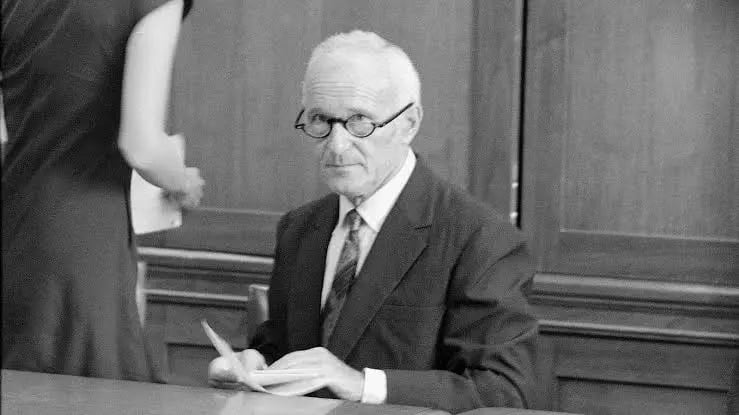
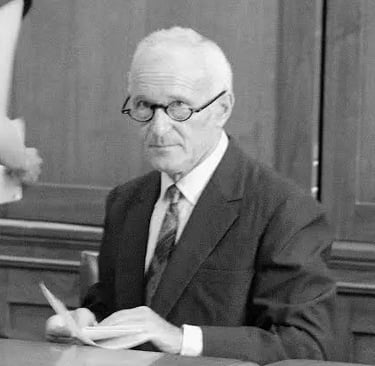
When Dr. Sidney Gottlieb sat before Senator Ted Kennedy’s joint subcommittee in September 1977, he was operating with absolute bureaucratic safety. He had been handed total legal immunity from criminal prosecution. He was completely shielded from a jail cell. Yet, despite being entirely safe from prison, Gottlieb ran a masterclass in tactical amnesia, hiding behind a wall of "I don't recall" and essentially pleading the Fifth Amendment while holding the government's immunity shield in his hand.
This cold stonewalling wasn't about protecting an old, retired chemist from a cell; it was about safeguarding an institutional framework that was never actually abandoned. Gottlieb’s post-retirement life—the serene public image of a gentle, goat-milking humanitarian running a leper colony in India—masks a dark intelligence reality: you might leave the payroll, but the agency never truly retires its master architect. The chemical and psychological torture frameworks pioneered by Gottlieb under the guise of "useless" research weren't thrown out in 1973. They were just buried deeper and reclassified into the modern infrastructure of state-sanctioned interrogation.
I. The Shield of Amnesia: The Orlikow Deposition (1983)
The primary way Gottlieb remained useful to the state after his "retirement" wasn't active laboratory work; it was defensive legal coordination. Throughout the 1970s and 1980s, the fallout of Gottlieb’s black-budget projects finally breached the public sector as victims began filing massive civil lawsuits against the U.S. government. Chief among these was Mrs. David Orlikow, et al. v. United States of America (Civil Action No. 80-3163), brought by Velma Orlikow—a victim of the horrific "depatterning" and "psychic driving" experiments run by Dr. D. Ewen Cameron at the CIA-funded Allan Memorial Institute in Montreal.
According to Document 20 of the unsealed CIA and the Behavioral Sciences archive—the official transcript of Gottlieb's second civil deposition on May 17, 1983—Gottlieb functioned as a sophisticated legal firewall. Under oath, his testimony shows a highly calculated pattern of selective memory:
The Interrogation Contradiction: When confronted with raw paperwork showing his hands-on operational role, Gottlieb claimed total confusion before grudgingly admitting he had been personally involved in "between one and five" black-site interrogations.
The Institutional Firewall: When pressed on the mechanics of Dr. Cameron keeping unwitting psychiatric patients on continuous doses of LSD for up to 77 consecutive days, Gottlieb claimed absolute memory failure, stating he couldn't "remember any specific projects or specific research mounted" to produce retrograde amnesia.
The Admission of Cover Identity: Gottlieb did, however, confirm the precise mechanics of the CIA's front organizations. He detailed how the Society for the Investigation of Human Ecology and the Geschickter Fund for Medical Research operated explicitly "as a funding mechanism so that the involvement of CIA’s organizational entity would not be apparent."
Gottlieb faced zero personal risk of prison. His calculated stonewalling in 1983 was a straight-up institutional defense directive: ensuring that the surviving logistical networks of the Technical Services Division (TSD) remained legally impenetrable.
II. The Fabricated Failure: From ARTICHOKE to KUBARK
The enduring myth of MKUltra—one that Gottlieb himself heavily pushed when he walked away—is that the project was a failure. Gottlieb claimed his decades of behavioral research yielded nothing useful. But when you look at the chronological development of these declassified operational files, you see that this was a deliberate misdirection. The agency didn't fail to create a Manchurian Candidate; they succeeded in mastering the exact mechanics of psychological destruction, coercive interrogation, and post-hypnotic amnesia.
The progression of the unsealed dossier charts this operational success across decades:
Document 6 (July 14, 1952): A Top Secret memo to the Director of Central Intelligence logs the "successful" application of narco-hypnotic interrogation under Project ARTICHOKE on suspected double agents. The report states that by pairing heavy dosages of sodium pentothal with the stimulant Desoxyn, handlers achieved "outstanding success," inducing absolute regression and a "total amnesia produced by post-hypnotic suggestion."
Document 10 (March 1954): An internal document details an ARTICHOKE team holding a key covert asset in a safehouse under the influence of massive chemical dosages for twelve hours, conducting ninety minutes of intense, direct interrogation under the cover-story of treating the asset for influenza. The reviewing consultants explicitly noted that the extreme chemical risks taken were "entirely justified by the ultimate results."
Document 16 (July 26, 1963): The landmark CIA Inspector General Report by John S. Earman notes that while "no effective knockout pill, truth serum, or recruitment pill" existed to reliably control actions externally, "real progress has been made in the use of drugs in support of interrogation."
The research wasn't discarded; it was codified. The exact chemical, sensory deprivation, and isolation techniques perfected under Gottlieb's oversight directly formed the foundation of the CIA's 1963 KUBARK Counterintelligence Interrogation Manual. These identical frameworks were subsequently exported and utilized across global detention facilities for the next fifty years, spanning from Latin America to modern black sites.
[1952: Narco-Hypnotic Success] ──> [1954: Safehouse Operations] ──> [1963: KUBARK Codification] ──> Modern Black Sites
III. The 1979 Callback: The Line That Never Existed
The traditional biography of Gottlieb frames his post-1973 life as a total break from espionage—a peaceful retirement spent breeding goats in Virginia, volunteering at hospices, and running a leper colony in India. But an intelligence asset possessing complete structural knowledge of the agency’s illegal domestic drug testing programs is never truly disconnected from the state apparatus.
The reality of his continued integration is captured in Documents 19A and 19B (dated April 30, 1979). Six years after his official retirement, the CIA actively re-engaged Gottlieb to assist in an internal assessment regarding past domestic drug testing on unwitting civilians.
The recorded telephonic debriefing exposes two critical insights:
Flawless Technical Recall: While Gottlieb continuously claimed a total lack of memory when facing congressional investigators or civil plaintiffs, his technical memory was flawless when communicating internally with the agency. He immediately recalled that the LSD deployed by federal narcotics agent George Hunter White in the New York and San Francisco safehouses was packaged precisely as "a solution in approximately 80 microgram units in plastic ampules."
The Scope of Target Testing: Gottlieb explicitly confirmed that approximately 40 separate field tests were successfully executed on completely unwitting American citizens specifically to "explore the full range of the operational use of LSD," including its utility for "interrogation" and "provoking erratic behavior."
IV. Analytical Summary: The Operational Reality
Dr. Sidney Gottlieb died at his home in Washington, Virginia, on March 7, 1999, at the age of 80. While the physical files of MKUltra were largely destroyed in the incinerators of 1973, the institutional legacy survived intact. The state apparatus never severed ties with its master poisoner because it required his continuous stewardship of its secrets. Through coordinated civil defenses, structured legal protection, and targeted post-retirement debriefings, the agency ensured that the operational methodology designed by Gottlieb survived, while the true scope of its human cost died with him.
Primary Sources & Archival Records
The National Security Archive Collection (2024): CIA and the Behavioral Sciences: Mind Control, Drug Experiments and MKULTRA — The foundational 1,200-document collection detailing the institutional history and newly unredacted safehouse entries.
The Joint Senate Hearing Record (1977): The Top Secret Testimony of CIA's MKULTRA Chief, 50 Years Later — Declassified transcripts of Gottlieb's testimony before the Senate Subcommittee on Health and Scientific Research.
Document 6 (1952): Memorandum for the Director of Central Intelligence: Successful Application of Narco-Hypnotic Interrogation (ARTICHOKE).
Document 16 (1963): John S. Earman, Inspector General, Report of Inspection of MKULTRA/TSD.
Document 19B (1979): CIA Memorandum for the Record: Telephonic Response of Dr. Gottlieb Regarding Safehouse Mechanics.
Document 20 (1983): Deposition of Sidney Gottlieb, PhD, in Civil Action No. 80-3163 (Mrs. David Orlikow, et al. v. United States of America).
Recommended Further Reading
Kinzer, Stephen (2019). Poisoner in Chief: Sidney Gottlieb and the CIA Search for Mind Control. New York: Henry Holt and Co.
Biographical Profile: The definitive, modern biographical work tracking Gottlieb's career, operations at Fort Detrick, and his post-intelligence activities.
Marks, John (1979). The Search for the "Manchurian Candidate": The CIA and Mind Control: The Secret History of the Behavioral Sciences. New York: Times Books / W. W. Norton & Company.
“For there is nothing hidden that will not be disclosed, and nothing concealed that will not be known or brought out into the open.” — Luke 8:17